Development
Generating energy from hydrogen
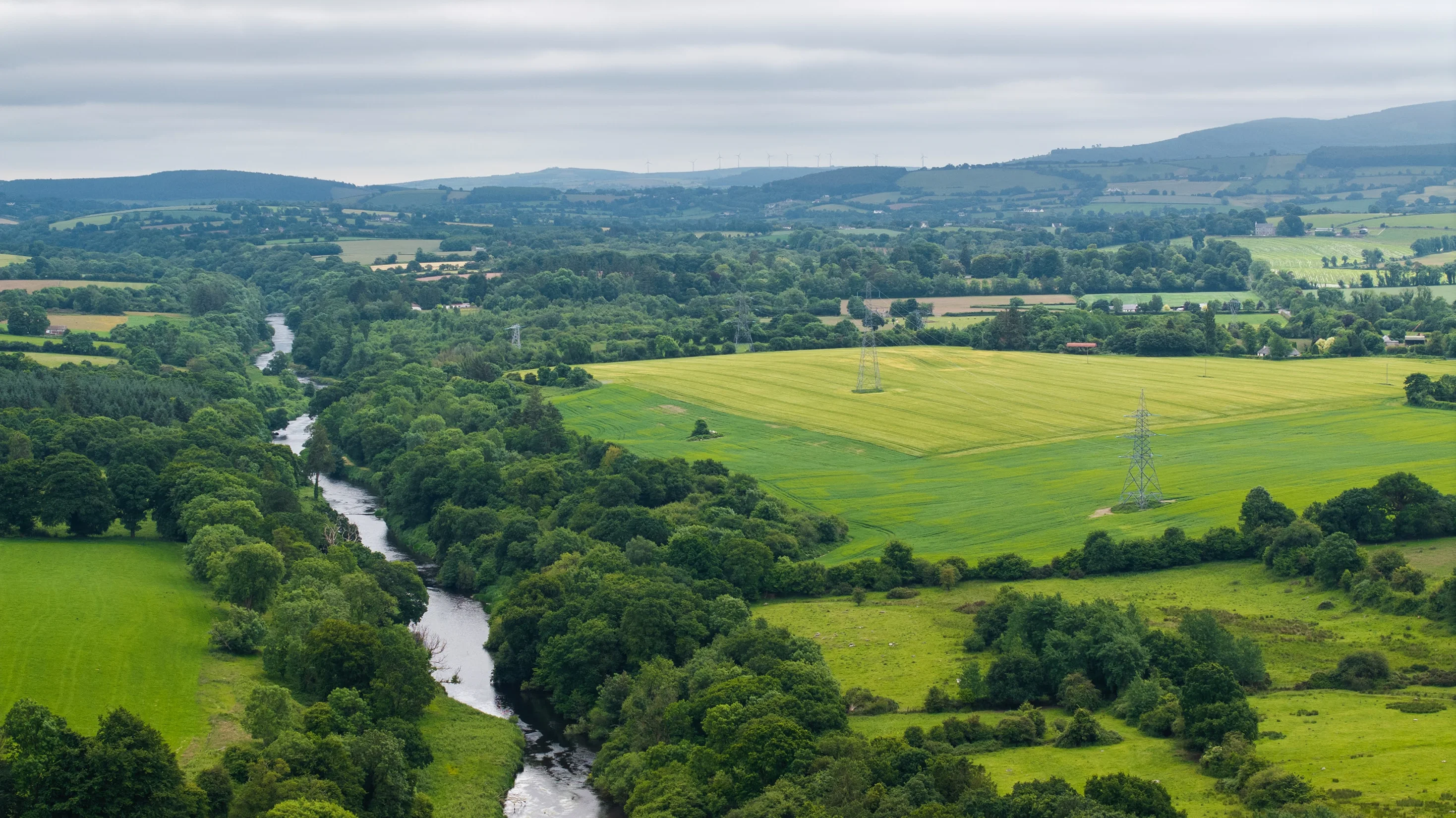
Harnessing wind power to produce green hydrogen
Hydrogen has been a part of industrial processes for centuries, but the hydrogen we currently use is predominantly fossil-based, derived from natural gas and coal. Today, only 1% of global hydrogen production comes from renewable sources. At Rathrush Green Energy Park, we are committed to changing that by producing green hydrogen. This is hydrogen made using renewable energy, which is both cleaner and more sustainable than its fossil-derived counterpart.
Through the process of electrolysis, green hydrogen is produced by using renewable electricity to split water into oxygen and hydrogen. Hydrogen burns in air to produce water vapour. Zero carbon dioxide is produced in this process. The project will revolutionise our ability to store clean energy for long durations. Therefore, it provides an obvious and reliable mechanism to store abundant renewable energy at times of excess for later use when there is a need or shortage.

Why green hydrogen?
There are other ways to store electricity for long durations, such as pumped hydro or some newer types of battery. What makes hydrogen special is that it is very energy dense, so it can store very large quantities of energy in a small footprint. The technologies for producing green hydrogen, storing it and generating electricity again are all technically mature and already in use around the world.
The benefits of green hydrogen

Environmental impact
Green hydrogen offers a clean alternative to fossil fuels. Hydrogen burns in air to produce water vapour. Zero carbon dioxide is produced in this process. By storing surplus wind for hours or days and releasing the energy again when it is needed, Ireland is making better use of its renewables thereby reducing - and ultimately eliminating - fossil fuel use. The more green electricity Ireland can produce, the more we can also eliminate fossil fuels and their associated air pollution by swapping out fossil fuel boilers for heat pump and moving to EVs.

Energy Security
Currently, Ireland imports the majority of its energy in the form of fossil gas through two vulnerable sub-sea pipelines. We can replace a lot of that energy by adding wind and solar, a process which is well underway. But there comes a point where simply adding more renewables brings less and less benefit. By adding long duration energy storage to the mix, Ireland can become 100% energy self-sufficient in electricity. This would protect our economy and keep the lights on if there was another gas price crisis such as the one caused by the Ukraine war.

Grid stability
By utilising surplus wind and solar power, green hydrogen helps balance the grid, ensuring a continuous, reliable energy supply without relying on fossil-fuel-based backup. Both the electrolysers and the gas turbines can respond very quickly to changes in wind, solar or demand, allowing EirGrid match supply and demand continuously.
Generating energy from hydrogen
Hydrogen is a naturally occurring gas and has been around for as long as time itself. It is the most abundant element in the universe.
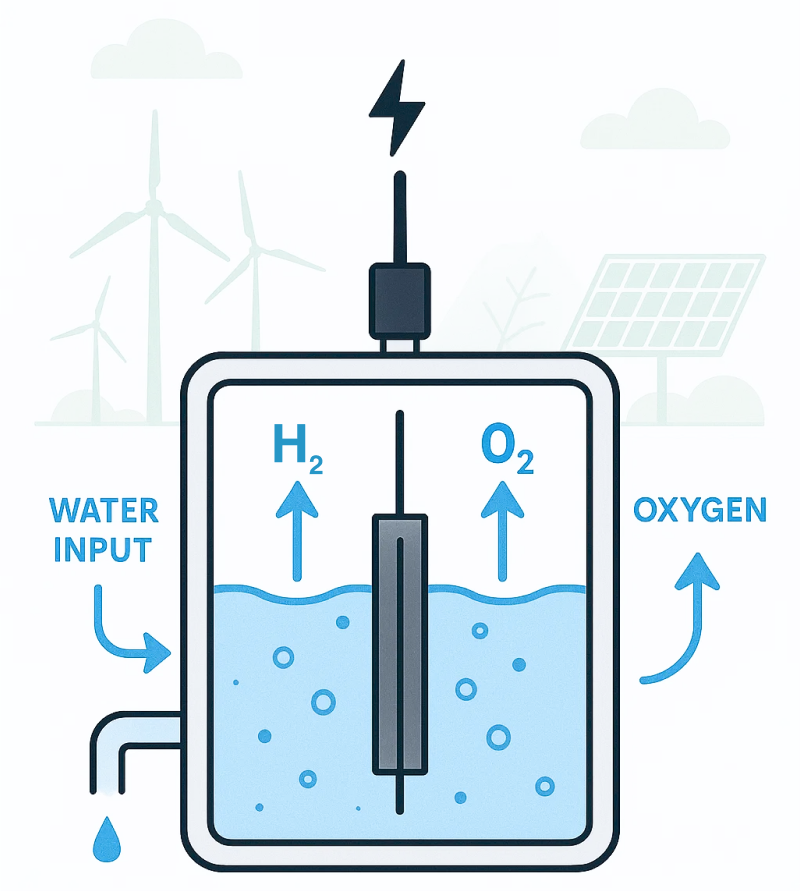
An electrolyser is a device that uses electricity to split water into oxygen gas and hydrogen gas. All electrolysers have three basic components: an anode and a cathode separated by an electrolyte. Exactly how these components work together to split water into hydrogen and oxygen depends on what materials they're made of.
The inputs to the process are electricity and water. Electrical current is passed through water in an electrolyser and splits the water molecule into hydrogen and oxygen. When using renewable energy for electrolysis, the hydrogen produced is called green hydrogen.
Storing gas underground
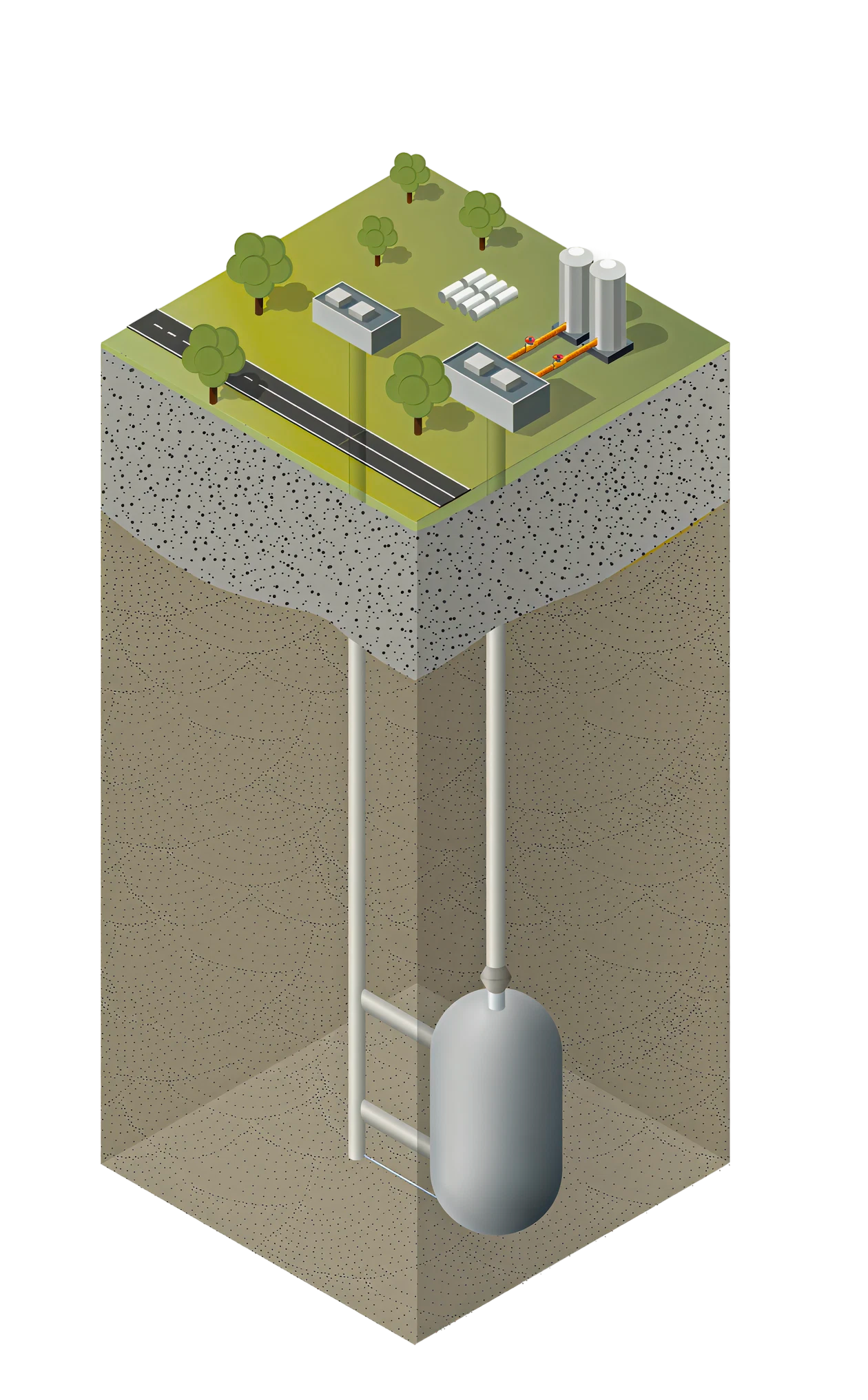
There are already hundreds of salt caverns, porous rock formations and hard rock caverns in use for storing various hydrocarbons and gases around the world today. Our project will further enhance the traditional hard rock cavern by including a gas-tight lining to form a tank. This ensures a complete seal to contain the hydrogen. The facility is thus known as a “lined rock cavern”.
A similar facility, also in granite and at a similar depth and scale has been operating in Skallen in Sweden for the last 20 years storing natural gas. The engineers and consultants working on our Carlow project were involved in the Swedish lined rock cavern projects as well as many of the other underground storage projects. A smaller scale facility, storing green hydrogen known as the Hybrit project, has been operating in Sweden since 2022.

Lined rock cavern
The lined rock cavern is a simple structure from an engineering perspective. It is constructed at a sufficient depth that the strength of the rock above it is more than adequate to maintain the pressure in the store. The lining adds an extra level of safety but even if it were to develop a leak, the hydrogen could not permeate through the rock to the surface in sufficient volumes to create any risk.
There are extensive safety systems, including a leak-detection system in the drainage mesh all around the caverns, automatic shut-off valves, overpressure vent valves and redundant sensor and control systems.

Did you
know?
Rathrush Green Energy Park will save an estimated 180,000 tonnes of CO₂ emissions annually which equates to removing 40,000 cars from our roads .
Development
Generating energy from hydrogen
Harnessing wind power to produce green hydrogen
Hydrogen has been a part of industrial processes for centuries, but the hydrogen we currently use is predominantly fossil-based, derived from natural gas and coal. Today, only 1% of global hydrogen production comes from renewable sources. At Rathrush Green Energy Park, we are committed to changing that by producing green hydrogen. This is hydrogen made using renewable energy, which is both cleaner and more sustainable than its fossil-derived counterpart.
Through the process of electrolysis, green hydrogen is produced by using renewable electricity to split water into oxygen and hydrogen. Hydrogen burns in air to produce water vapour. Zero carbon dioxide is produced in this process. The project will revolutionise our ability to store clean energy for long durations. Therefore, it provides an obvious and reliable mechanism to store abundant renewable energy at times of excess for later use when there is a need or shortage.
Why green hydrogen?
There are other ways to store electricity for long durations, such as pumped hydro or some newer types of battery. What makes hydrogen special is that it is very energy dense, so it can store very large quantities of energy in a small footprint. The technologies for producing green hydrogen, storing it and generating electricity again are all technically mature and already in use around the world.
The benefits of green hydrogen
Environmental impact
Green hydrogen offers a clean alternative to fossil fuels. Hydrogen burns in air to produce water vapour. Zero carbon dioxide is produced in this process. By storing surplus wind for hours or days and releasing the energy again when it is needed, Ireland is making better use of its renewables thereby reducing - and ultimately eliminating - fossil fuel use. The more green electricity Ireland can produce, the more we can also eliminate fossil fuels and their associated air pollution by swapping out fossil fuel boilers for heat pump and moving to EVs.
Energy Security
Currently, Ireland imports the majority of its energy in the form of fossil gas through two vulnerable sub-sea pipelines. We can replace a lot of that energy by adding wind and solar, a process which is well underway. But there comes a point where simply adding more renewables brings less and less benefit. By adding long duration energy storage to the mix, Ireland can become 100% energy self-sufficient in electricity. This would protect our economy and keep the lights on if there was another gas price crisis such as the one caused by the Ukraine war.
Grid stability
By utilising surplus wind and solar power, green hydrogen helps balance the grid, ensuring a continuous, reliable energy supply without relying on fossil-fuel-based backup. Both the electrolysers and the gas turbines can respond very quickly to changes in wind, solar or demand, allowing EirGrid match supply and demand continuously.
Generating energy from hydrogen
Hydrogen is a naturally occurring gas and has been around for as long as time itself. It is the most abundant element in the universe.
An electrolyser is a device that uses electricity to split water into oxygen gas and hydrogen gas. All electrolysers have three basic components: an anode and a cathode separated by an electrolyte. Exactly how these components work together to split water into hydrogen and oxygen depends on what materials they're made of.
The inputs to the process are electricity and water. Electrical current is passed through water in an electrolyser and splits the water molecule into hydrogen and oxygen. When using renewable energy for electrolysis, the hydrogen produced is called green hydrogen.
Storing gas underground
There are already hundreds of salt caverns, porous rock formations and hard rock caverns in use for storing various hydrocarbons and gases around the world today. Our project will further enhance the traditional hard rock cavern by including a gas-tight lining to form a tank. This ensures a complete seal to contain the hydrogen. The facility is thus known as a “lined rock cavern”.
A similar facility, also in granite and at a similar depth and scale has been operating in Skallen in Sweden for the last 20 years storing natural gas. The engineers and consultants working on our Carlow project were involved in the Swedish lined rock cavern projects as well as many of the other underground storage projects. A smaller scale facility, storing green hydrogen known as the Hybrit project, has been operating in Sweden since 2022.
Lined rock cavern
The lined rock cavern is a simple structure from an engineering perspective. It is constructed at a sufficient depth that the strength of the rock above it is more than adequate to maintain the pressure in the store. The lining adds an extra level of safety but even if it were to develop a leak, the hydrogen could not permeate through the rock to the surface in sufficient volumes to create any risk.
There are extensive safety systems, including a leak-detection system in the drainage mesh all around the caverns, automatic shut-off valves, overpressure vent valves and redundant sensor and control systems.
Did you
know?
Rathrush Green Energy Park will save an estimated 180,000 tonnes of CO₂ emissions annually which equates to removing 40,000 cars from our roads .

Development
Generating energy from hydrogen
Harnessing wind power to produce green hydrogen
Hydrogen has been a part of industrial processes for centuries, but the hydrogen we currently use is predominantly fossil-based, derived from natural gas and coal. Today, only 1% of global hydrogen production comes from renewable sources. At Rathrush Green Energy Park, we are committed to changing that by producing green hydrogen. This is hydrogen made using renewable energy, which is both cleaner and more sustainable than its fossil-derived counterpart.
Through the process of electrolysis, green hydrogen is produced by using renewable electricity to split water into oxygen and hydrogen. Hydrogen burns in air to produce water vapour. Zero carbon dioxide is produced in this process. The project will revolutionise our ability to store clean energy for long durations. Therefore, it provides an obvious and reliable mechanism to store abundant renewable energy at times of excess for later use when there is a need or shortage.
Why green hydrogen?
There are other ways to store electricity for long durations, such as pumped hydro or some newer types of battery. What makes hydrogen special is that it is very energy dense, so it can store very large quantities of energy in a small footprint. The technologies for producing green hydrogen, storing it and generating electricity again are all technically mature and already in use around the world.
The benefits of green hydrogen
Environmental impact
Green hydrogen offers a clean alternative to fossil fuels. Hydrogen burns in air to produce water vapour. Zero carbon dioxide is produced in this process. By storing surplus wind for hours or days and releasing the energy again when it is needed, Ireland is making better use of its renewables thereby reducing - and ultimately eliminating - fossil fuel use. The more green electricity Ireland can produce, the more we can also eliminate fossil fuels and their associated air pollution by swapping out fossil fuel boilers for heat pump and moving to EVs.
Energy Security
Currently, Ireland imports the majority of its energy in the form of fossil gas through two vulnerable sub-sea pipelines. We can replace a lot of that energy by adding wind and solar, a process which is well underway. But there comes a point where simply adding more renewables brings less and less benefit. By adding long duration energy storage to the mix, Ireland can become 100% energy self-sufficient in electricity. This would protect our economy and keep the lights on if there was another gas price crisis such as the one caused by the Ukraine war.
Grid stability
By utilising surplus wind and solar power, green hydrogen helps balance the grid, ensuring a continuous, reliable energy supply without relying on fossil-fuel-based backup. Both the electrolysers and the gas turbines can respond very quickly to changes in wind, solar or demand, allowing EirGrid match supply and demand continuously.
Generating energy from hydrogen
Hydrogen is a naturally occurring gas and has been around for as long as time itself. It is the most abundant element in the universe.
An electrolyser is a device that uses electricity to split water into oxygen gas and hydrogen gas. All electrolysers have three basic components: an anode and a cathode separated by an electrolyte. Exactly how these components work together to split water into hydrogen and oxygen depends on what materials they're made of.
The inputs to the process are electricity and water. Electrical current is passed through water in an electrolyser and splits the water molecule into hydrogen and oxygen. When using renewable energy for electrolysis, the hydrogen produced is called green hydrogen.
Storing gas underground
There are already hundreds of salt caverns, porous rock formations and hard rock caverns in use for storing various hydrocarbons and gases around the world today. Our project will further enhance the traditional hard rock cavern by including a gas-tight lining to form a tank. This ensures a complete seal to contain the hydrogen. The facility is thus known as a “lined rock cavern”.
A similar facility, also in granite and at a similar depth and scale has been operating in Skallen in Sweden for the last 20 years storing natural gas. The engineers and consultants working on our Carlow project were involved in the Swedish lined rock cavern projects as well as many of the other underground storage projects. A smaller scale facility, storing green hydrogen known as the Hybrit project, has been operating in Sweden since 2022.
Lined rock cavern
The lined rock cavern is a simple structure from an engineering perspective. It is constructed at a sufficient depth that the strength of the rock above it is more than adequate to maintain the pressure in the store. The lining adds an extra level of safety but even if it were to develop a leak, the hydrogen could not permeate through the rock to the surface in sufficient volumes to create any risk.
There are extensive safety systems, including a leak-detection system in the drainage mesh all around the caverns, automatic shut-off valves, overpressure vent valves and redundant sensor and control systems.
Did you
know?
Rathrush Green Energy Park will save an estimated 180,000 tonnes of CO₂ emissions annually which equates to removing 40,000 cars from our roads .
FAQ
News
About us
Contact us